The Amazon rainforest is home to some of the most fascinating and mysterious creatures on Earth. Deep inside its rivers, wetlands, swamps, and dense tropical forests lives one of the most powerful reptiles in the world—the green anaconda.
Often described as the world’s biggest anaconda, the green anaconda is actually the heaviest living snake on Earth. It can grow to more than 29 feet in exceptional cases and weigh over 550 pounds. Unlike many large snakes that spend most of their time on land, the green anaconda is highly adapted to life in water.
The Giant of the Amazon
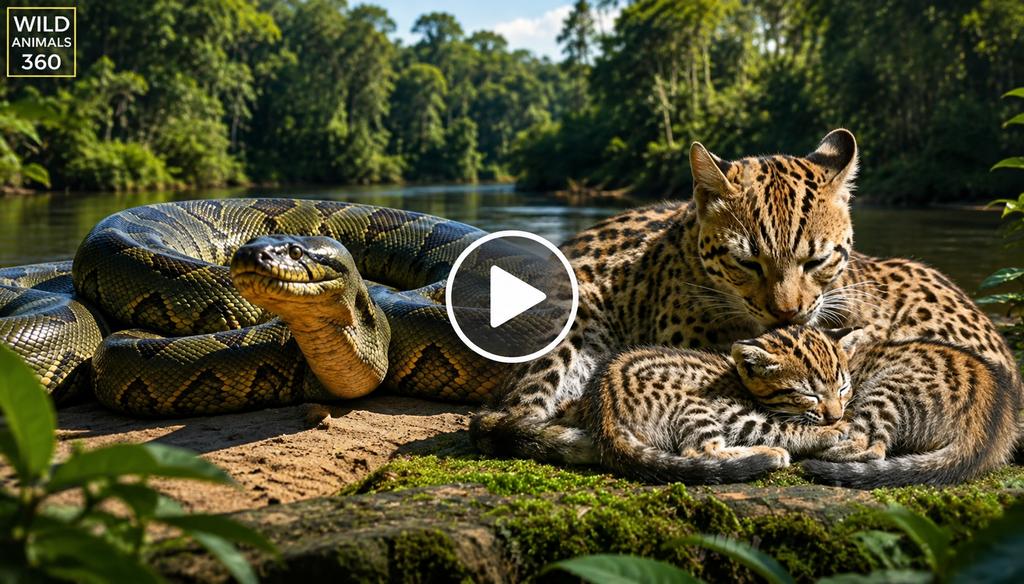
The green anaconda, scientifically known as Eunectes murinus, is strongly associated with the wetlands and slow-moving waterways of South America. Its habitat includes parts of the Amazon and Orinoco basins, where rivers, marshes, flooded forests, and ponds provide ideal conditions for this massive predator.
Its body is thick and muscular, with olive-green skin covered by dark rounded markings. The pattern helps the snake blend into muddy water, vegetation, and shadows.
Female green anacondas are considerably larger than males. This difference between the sexes is one of the most noticeable characteristics of the species.
Why Is the Anaconda So Large?
The Amazon provides an abundant supply of food, and the green anaconda has evolved to take advantage of it.
Its diet can include fish, birds, turtles, capybaras, caimans and other animals. The snake is a nonvenomous constrictor, meaning it does not rely on venom to kill its prey. Instead, it uses its powerful muscles to wrap around an animal and squeeze it.
After capturing prey, the anaconda can swallow its meal whole. Its jaws are connected by flexible ligaments, allowing the mouth to open remarkably wide.
A large meal can provide enough energy for the snake to survive for weeks or even months without eating again.
A Silent Hunter Under the Water
One of the most impressive features of the green anaconda is its ability to hunt while remaining almost completely hidden.
The snake’s eyes and nostrils are positioned high on its head. This allows it to stay mostly underwater while watching and sensing what is happening around it.
Anacondas can remain underwater for around 10 minutes, making them extremely effective ambush predators.
Rather than chasing prey over long distances, the snake often waits patiently. When an opportunity appears, it strikes quickly, grabs the animal with its teeth and uses its muscular body to overpower it.
This hunting strategy is one reason the green anaconda has earned its reputation as a silent giant of the Amazon.
Is the Green Anaconda Really the Longest Snake?
There is an important difference between heaviest and longest.
The green anaconda is widely recognized as the heaviest living snake. National Geographic reports weights of up to about 550 pounds and lengths exceeding 29 feet for exceptional individuals.
However, the reticulated python of Southeast Asia can reach greater lengths. In 2026, Guinness World Records recognition reported by National Geographic identified a reticulated python known as Ibu Baron as the longest verifiably measured wild snake.
So, calling the green anaconda the “world’s biggest snake” is best understood in terms of its enormous weight and body mass, rather than claiming that it is always the longest.
A New Discovery Changed What Scientists Know
Scientists have also discovered that what was traditionally called the green anaconda actually includes more genetic diversity than previously understood.
Research published in 2024 found that northern and southern populations were genetically distinct. Researchers proposed the name northern green anaconda (Eunectes akayima) for the northern population, while Eunectes murinus continues to refer to the southern green anaconda.
This discovery shows that even one of the Amazon’s most famous animals still has secrets waiting to be uncovered.
Do Anacondas Attack Humans?
Movies and viral videos have often portrayed anacondas as aggressive monsters that actively hunt people. The reality is more complicated.
Green anacondas are certainly enormous and powerful predators, but humans are not their normal prey. Their natural diet consists primarily of animals living in or around their aquatic habitats. National Geographic notes that although their size means they could potentially kill a person, reliably documented human attacks by anacondas are extremely rare.
Their reputation has therefore been influenced heavily by popular culture.
The Amazon Is Their Natural World
For a green anaconda, the Amazon’s waterways are more than just a place to find food. They provide shelter, hunting grounds and protection from the challenges of moving on land.
The snake’s body is far more efficient in water than on dry ground. It can move quietly through vegetation and muddy waterways, using its surroundings as camouflage.
This makes spotting a large wild anaconda in its natural environment a rare and memorable experience.
How Long Do Green Anacondas Live?
Green anacondas are not among the longest-lived reptiles. Their estimated lifespan in the wild is around 10 years, although individuals can live longer in captivity. Females give birth to live young rather than laying eggs.
A female can produce several dozen babies, with newborn anacondas measuring roughly two feet long. The young snakes can swim and hunt soon after birth.
The Silent Giant Deserves Protection
Despite its fearsome reputation, the green anaconda is an important part of the Amazon ecosystem. As a major predator, it helps regulate populations of other animals within its habitat.
Human activity remains a significant threat to anacondas. Habitat destruction and hunting for their skin can put pressure on populations, while misinformation can also encourage people to fear or kill these animals unnecessarily.
The green anaconda reminds us that the Amazon rainforest is still full of wildlife that scientists continue to study and understand.
Final Thoughts
The green anaconda truly deserves its reputation as one of the most impressive animals in the Amazon. With its enormous body, powerful muscles, aquatic lifestyle and remarkable hunting abilities, it is a perfect example of how wildlife adapts to its environment.
Although it is more accurate to call the green anaconda the heaviest living snake rather than simply the longest snake in the world, its size is still extraordinary.
Deep beneath the green canopy of the Amazon, these silent giants continue to move through rivers and wetlands—largely unseen, but playing an important role in one of the world’s most remarkable ecosystems.